


The Great South
ADVENTURE AND TREKKING
19 days / 18 nights
from 2580€


Trip description
Embark on a fascinating journey through southern Madagascar, where the diversity of landscapes and ecosystems will amaze you at every turn. From the rainforests of Ranomafana to the sculpted canyons of Isalo National Park, and from the tranquil waters of the Pangalanes Canal to the beaches of Ifaty, this itinerary offers a truly comprehensive experience. Discover the rich cultural heritage of Fianarantsoa, the colonial charm of Antsirabe, and the vibrant wildlife in unique nature reserves such as Anja and Zombitse. A complete journey to explore the essence of southern Madagascar.
- Itinerary
- Included / not included
- Prices
- More Information
Day 1
ARRIVAL IN ANTANANARIVO
Arrival at Ivato International Airport. Welcome and transfer to the hotel.
Day 2
PEYRIERAS RESERVE
Sunrise offers us an adventure waiting to be discovered. We head east to the Peyrieras Reserve, a haven of biodiversity. Named after its founder, the Peyrieras Reserve is home to a large number of insects, reptiles, amphibians, and milano butterflies, species that are difficult to see in the national parks in this part of the island.
As evening falls, a special experience awaits us before dinner. A night tour will allow us to explore the life of reptiles of different shapes and sizes and mysterious amphibians. We will also meet the curious microcebus, the world's smallest primate, and other nocturnal lemurs.
Day 3
ANDASIBE NATIONAL PARK
An exceptional day awaits us, full of unique experiences in contact with nature. Our morning takes us to the Analamazaotra Special Reserve, nestled in the heart of Andasibe National Park. It is here that the unique charm of Malagasy wildlife is revealed. In the heart of this reserve, the Indri, the largest of the lemurs, dances among the trees. If we are lucky, we will be able to hear its haunting song, a natural melody that touches the heart.
In the afternoon, we will continue our journey in this unique environment by visiting another reserve where other animal species live in harmony with their surroundings.
Night is falling, but the sweet excitement of this day remains etched in our minds, a tender and natural memory that will accompany our dreams.
Day 4
LANDSCAPES OF THE MALGACHE HIGHLANDS
Today we will head towards the city of Antsirabe, located on the RN 7 route. Along the way, we will discover small typical Merina villages, characterized by their mud and straw houses, which exude a warm atmosphere.
The landscape is marked by rice paddies and fields with various crops. This region is known as the vegetable garden of Madagascar.
Passing through Ambatolampy, we will make a slight detour to explore the aluminum foundry, which specializes in the manufacture of charming accessories that are used throughout the island.
Day 5
TRITRIVA VOLCANIC LAKE
Amanece una expléndida mañana en nuestra aventura por Madagascar, que promete descubrimientos inolvidables. Nuestra primera parada nos lleva al epicentro del místico Lago Tritriva, enclavado en el cráter de un antiguo volcán. Un espectáculo sobrecogedor se despliega ante nuestros ojos, mientras las aguas del lago se extienden a más de 160 metros de profundidad. Cada rincón cuenta la fascinante historia de este lugar cargado de una energía única, una historia que escucharemos de boca de los nativos de este lugar.
El destino nos conduce a Antsirabe, en donde exploramos en pousse-pousse el centro de esta histórica y encantadora ciudad colonial.
Day 6
THE BETSILEO AND ZAFIMANIRY CRAFTS
We find ourselves on the “frontier” where three of the sixteen ethnic groups that inhabit the country converge. We bid farewell to the Merina to greet the Betsileo and the Zafimaniry. The latter, renowned as the island's great cabinetmakers, live in seclusion deep in the mountains bordering Ambositra, a town where you can find furniture and decorative accessories made from different types of wood that reflect the beauty of Zafimaniry art.
Day 7
RANOMAFANA NATIONAL PARK
Visit one of Madagascar's most enigmatic parks, Ranomafana National Park, where species of fauna and flora that do not exist beyond its boundaries coexist in perfect harmony.
The entire Ranomafana National Park is located in the middle of the jungle, in a lush tropical rainforest covering some 41,601 hectares and at an average altitude of 1,000 meters above sea level.
The great diversity of animal and plant species in the park has attracted the attention of numerous biologists and naturalists from around the world for decades. For example, Ranomafana is home to more than 12 different species of lemurs (Propithecus edwardsi, Hapalémur aureus, Hapalémur griseus ranomafanensis, Eulémur Rubriventer, Prolémur simus; one of the most endangered species on the planet,...), as well as hundreds of varieties of wild orchids and more than 115 species of birds that inhabit this wild forest, 90 species of butterflies, 98 species of amphibians, 62 species of reptiles, etc.
Day 8
SAILING THE WATERS OF THE ANTEMORO
We head to the Pangalanes Canal, where we board a traditional boat to sail its waters. During the trip, we stop to visit a village of the Antemoro ethnic group who live in this southern part of the canal. Built during the French colonial era, this is one of the most authentic and charming places in the eastern part of the great African island.
Picnic (included) consisting of seafood and/or fish.
Day 9
FIANARANTSOA AND ITS PEOPLE
Today we will visit the center of Fianarantsoa, whose name means “good education.” For a time, it was the cultural and intellectual center of the island. It is home to some of the oldest Protestant and Lutheran cathedrals in the country, the oldest theological seminary, and the Catholic Archdiocese of Fianarantsoa.
Day 10
ANJA, LAND OF THE RING-TAILED LEMUR
Our route takes us to the peaceful town of Ambalavao, where we plan to visit a local workshop that manufactures Antemoro paper. Immersed in its history, it was in the 12th century when the Arabs, upon their arrival on the eastern coast of Madagascar, introduced the Antemoro people to the fascinating art of making this paper, initially used to reproduce the Koran.
Continuing our journey, we arrive at the Anja Reserve, which boasts a unique topography marked by imposing rocks and caves. It is located at the foot of a huge rock massif, surrounded by rice fields and Lake Anja. Here, surrounded by nature, we have the opportunity to observe the ring-tailed lemur, recognizable by its ringed tail, as well as a wide variety of reptiles, chameleons, and the Madagascar brown boa.
After the visit, we head to one of the most beautiful corners hidden on this great island, the Tsaranoro Valley.
Day 11
TREKKING IN THE TSARANORO VALLEY
In the heart of the Tsaranoro Valley, an exceptional day of trekking awaits us on Mount Camaleon (elevation gain: 627 m). Its summit, at an altitude of 1,489 meters, offers a breathtaking view of the valley and the Tsaranoro Massif.
On the way up, we will pass through a dry tropical forest. We will be guided by the whisper of the wind and the aerial dance of the birds. The catta, guardians of this natural treasure, may greet us with their cheerful calls. Cana lovebirds add their melody to this natural symphony, transforming our walk into a dance in harmony with nature.
After two or three hours of effort, we reach the summit of Mount Camaleon, where the immensity of the panorama envelops us. It is a moment suspended in time, an impressive tableau where the Tsaranoro Valley stretches as far as the eye can see.
On the way back, we stop in a village where life beats to the peaceful rhythm of the valley. We have our picnic (included) in front of the Tsaranoro massif, in communion with the nature that surrounds us.
As night falls, we relax, the stars come out, and the echo of this exceptional day still resonates in our hearts.
Day 12
ENCOUNTERING THE BARA
Let's continue our adventure south on RN 7, where the horizons stretch all the way to Ranohira, the majestic gateway to Isalo National Park. This park is one of the most admired in Madagascar.
Along the way, we make a welcome stop in the village of Ihosy, home to the Bara ethnic group.
The sun, our companion on this journey, begins to gently set on the horizon as we arrive in Ranohira.
Day 13
TREKKING IN ISALO NATIONAL PARK
A day of hiking in Isalo National Park promises to be a symphony of discoveries. This vast territory of 81,540 hectares stretches along its 164-kilometer perimeter, making it one of the largest national parks in the country. The adventure takes us through enchanting landscapes, dotted with wonders such as the Nymphs waterfall, the blue pool, and the black pool, nestled in the Namaza canyon.
What makes Isalo so special are its sandstone formations, testimony to the Jurassic period, which reveal a distinctive geomorphology. In this semi-arid environment, endemic vegetation of extraordinary beauty thrives. From aloes to euphorbias, from pachypodiums to kalanchoes, this floral diversity constitutes a veritable palette of colors and shapes, adding an extraordinary dimension to the ecosystem of this natural gem. This exceptional enclave is home to no less than 77 species of birds, nearly 40 species of reptiles, as well as 14 species of primates, some of which are unique to this region.
At midday, we take a well-deserved break and enjoy a picnic (included) prepared by the park's master chefs.
This setting offers us a heavenly spectacle, creating a living canvas that brings this day of adventure to a close.
Day 14
ZOMBITSE - VOHIBASIA NATIONAL PARK
Here, the baobab savannah weaves a landscape that awakens the senses, testimony to the splendor of western Madagascar.
Zombitse-Vohibasia National Park, an ornithological paradise, is famous for its wealth of rare bird species. These birds coexist with other animal species unique to this environment, such as the Propithecus verreauxi sifaka and the Lepilemur ruficaudatus nocturnal lemur.
As we explore this exceptional environment, we may encounter the fascinating fossa, Madagascar's largest predatory mammal.
The sunset takes us by surprise in front of the Mozambique Channel.
Day 15
BEACHES OF SOUTHWEST MADAGASCAR
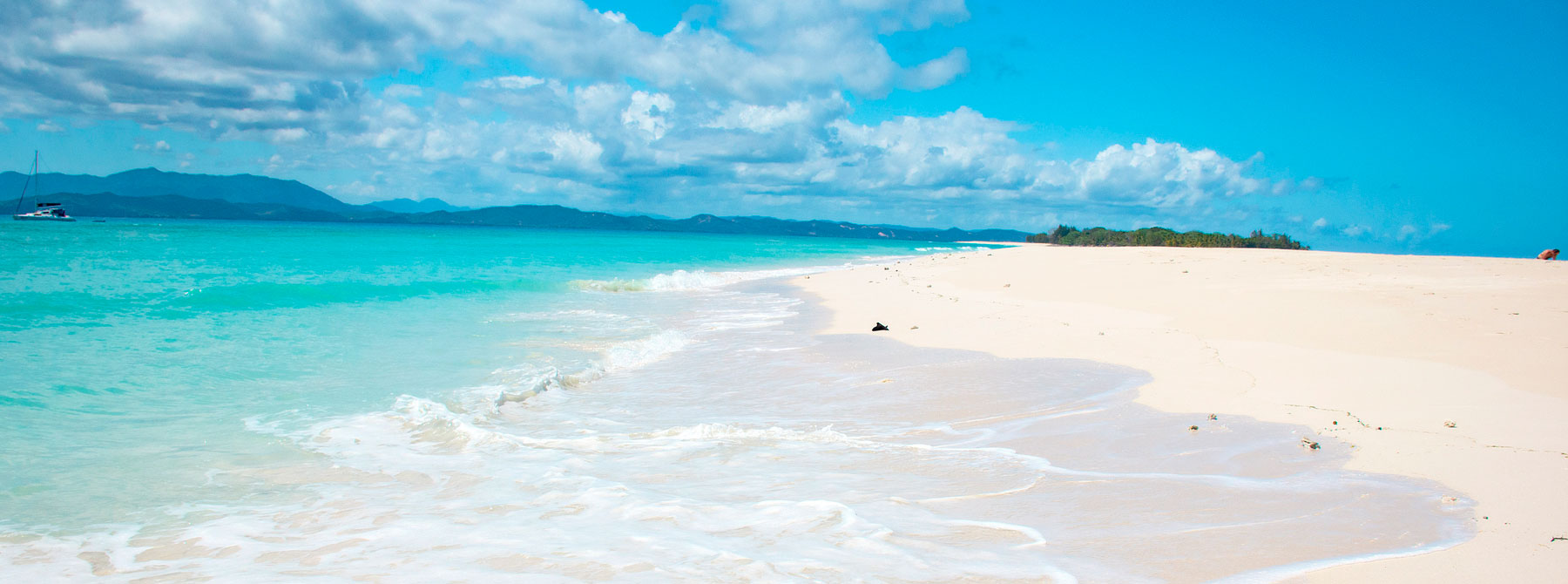
Under the enchanting sky, a day off unfolds like a chapter written according to your wishes. The waves whisper promises of relaxation and the beach invites you to explore.
Free day.
This setting is the backdrop for an exceptional event: the birth and early months of the humpback whales that spend certain months of the year here. A captivating spectacle that makes every moment an unforgettable experience.
If we wish, we can visit (not included) places such as the Reniala baobab forest or sign up for water activities organized at the accommodation and paid for on arrival.
Day 16
BEACHES OF SOUTHWEST MADAGASCAR
We wake up relaxed in front of the coral reef, crisscrossed by the sail canoes of the Vezo fishermen.
Free day.
Day 17
FLIGHT TO THE CAPITAL OF MADAGASCAR
It's time to say goodbye to the beaches of the vezo and fly to vibrant Antananarivo, the capital city that beats to the rhythm of the island. Upon arrival, a transfer through the bustling streets takes us to our accommodation in the heart of the city.
Day 18
INTERNATIONAL RETURN FLIGHT
With mixed emotions, we headed to the airport to catch our flight home. This farewell day is filled with a symphony of memories that will stay with us forever.
Day 19
ARRIVAL IN THE CITY OF ORIGIN
Arrival in the country of origin.
Includes
Accommodation as indicated below:
- 2 travelers: 1 double room
- 3 travelers: 1 triple room
- 4 travelers: 2 double rooms
- 5 travelers: 1 double room + 1 triple room
- 6 travelers: 3 double rooms
Breakfasts + three (03) picnics.
Vehicle with driver, except at the beach.
Fuel.
Transfers between airports and hotels.
Local guides (mandatory) for historical visits, national parks, and reserves.
Entrance fees for historical visits, national parks, and reserves.
Local taxes.
Online support throughout the trip.
Not included
Flights.
Visa.
Healthcare and cancellation insurance (highly recommended).
Activities and excursions during your stay at the beach.
Drinks.
Meals, except those indicated in the “Includes” section.
Surcharge for accommodation of a higher category than that specified.
Anything not included in the “Includes” section.
No. of travelers: 2
Driver speaks foreign language (1)
- 2580€ (Tourist category)
- 2810€ (Standard category)
Driver + accompanying guide (1)
- 3120€ (Tourist category)
- 3350€ (Standard category)
No. of travelers: 3
Driver speaks foreign language (1)
- 2420€ (Tourist category)
- 2650€ (Standard category)
Driver + accompanying guide (1)
- 2780€ (Tourist category)
- 3010€ (Standard category)
No. of travelers: 4
Driver speaks foreign language (1)
- 2420€ (Tourist category)
- 2650€ (Standard category)
Driver + accompanying guide (1)
- 2690€ (Tourist category)
- 2920€ (Standard category)
No. of travelers: 5
Driver + accompanying guide (1)
- 2650€ (Tourist category)
- 2880€ (Standard category)
Traveling in Madagascar
Madagascar is the fourth largest island on the planet, with an area larger than Spain, and its infrastructure is very different from what we are used to. Its road network is very limited and the condition of the roads often means that it takes quite a long time to travel between two destinations.
The pace of life in Madagascar is dictated by daylight hours, with the day beginning between 5:00 and 6:30 a.m., when it is dawn or has already dawned, and ending at 6:30 p.m., when it is completely dark and coincides with the local dinner time.
National parks and reserves usually open their doors early, normally between 6:30 and 8:00 a.m., in order to take advantage of the most active time for daytime wildlife, which is usually in the early morning.
We will soon adapt to this Malagasy rhythm, which, although sometimes unusual for us, allows us to make the most of the daylight hours for visits and travel between destinations and to take advantage of the hours of darkness to rest, sleep, and recharge our batteries for the next day.
Passport and Visa
Your passport must be valid for at least 6 months from the date of departure from Madagascar and have at least 3 blank pages.
A visa is required in all cases and can be obtained directly at the international airport upon arrival in the country. The cost depends on the length of your stay in the country.
Currency and Exchange
The country's currency is the Ariary (MGA). In most destinations, it is necessary to pay in cash with local currency, as card payments are not common.
It is possible to exchange money at the international airport and at banks during business hours. In the country's main towns, there are ATMs where you can withdraw money with your credit card (Visa/Mastercard).
International Vaccination Center
No vaccinations are required to enter Madagascar, provided that the traveler is not coming from a country where yellow fever is endemic, in which case only the yellow fever vaccination is necessary. For more information, consult the international vaccination center in your country of origin.
Pharmacies in the country's major cities stock all types of medication, although it is advisable to bring any necessary medication with you from your country of origin.
Packing List
- Trekking shoes or boots, preferably Gore-Tex and with Vibram soles.
- Socks.
- 2 pairs of pants (one long and one short), easy to wash and quick-drying.
- One pair of jeans.
- Underwear.
- Flip-flops.
- Fleece jacket for the highlands.
- Summer clothes.
- Rain jacket.
- Headlamp.
- Batteries and/or power bank.
- High SPF sunscreen (one should be enough for everyone).
- Hat or cap.
- Sunglasses for the beach.
- Swimsuit.
- Mosquito repellent, such as Relec Forte.
- Motion sickness medication (most of the roads in the highlands are winding).
- Necessary medications (antibiotics, eye drops, anti-diarrheal medication, anti-inflammatory medication, antihistamine, etc.).
- Camera equipment.
- Small backpack for day hikes.
- Euros for currency exchange.
And anything else the traveler deems necessary.
Luggage allowance per passenger: one soft suitcase, backpack, or similar, and one small trekking backpack or similar. In addition to your carry-on bag and camera.
The luggage allowance for local airlines is: one piece of checked luggage (max.: 20 kg) and one small piece of carry-on luggage (max.: 05 kg).
Medical Assistance and Cancellation Insurance
When making a reservation, travelers must purchase health insurance and trip cancellation insurance that is tailored to the characteristics of the trip and covers the cost of the trip.
Route map
Your journey starts here. Book now and join us!
You might also be interested in…
Corners of the North
In northern Madagascar, the turquoise waters of its beaches merge with its imposing Tsingy and untamed nature to create a unique landscape.
Customize your trip!
If you want to customize your trip, write to us!
We'll contact you to design your dream trip together.


